
The Importance of UN-Approved Packaging in the Safe Movement of Liquid Cargo
Moving liquid cargo in drums is rarely as straightforward as it looks on paper. From the time a package leaves the shipper until it reaches its destination, it is handled multiple times, often by different teams and equipment. Drums are stacked, shifted, stored, and moved again, and each of these steps puts stress on the outer packaging. Add vibration during transport and changes in temperature or storage conditions, and weak or non-compliant packaging quickly becomes a problem. In such cases, issues like leakage, cargo damage, and regulatory non-compliance are not uncommon.
To address these risks, UN-approved packaging is developed in line with the United Nations Recommendations on the Transport of Dangerous Goods. Before approval, such packaging is subjected to a series of performance tests, including drop, stacking, vibration, and pressure testing. These tests are intended to replicate real transport conditions and confirm that the packaging can withstand the demands of international logistics. For dangerous goods in liquid form, the use of UN-compliant outer packaging is both a safety measure and a mandatory regulatory requirement.
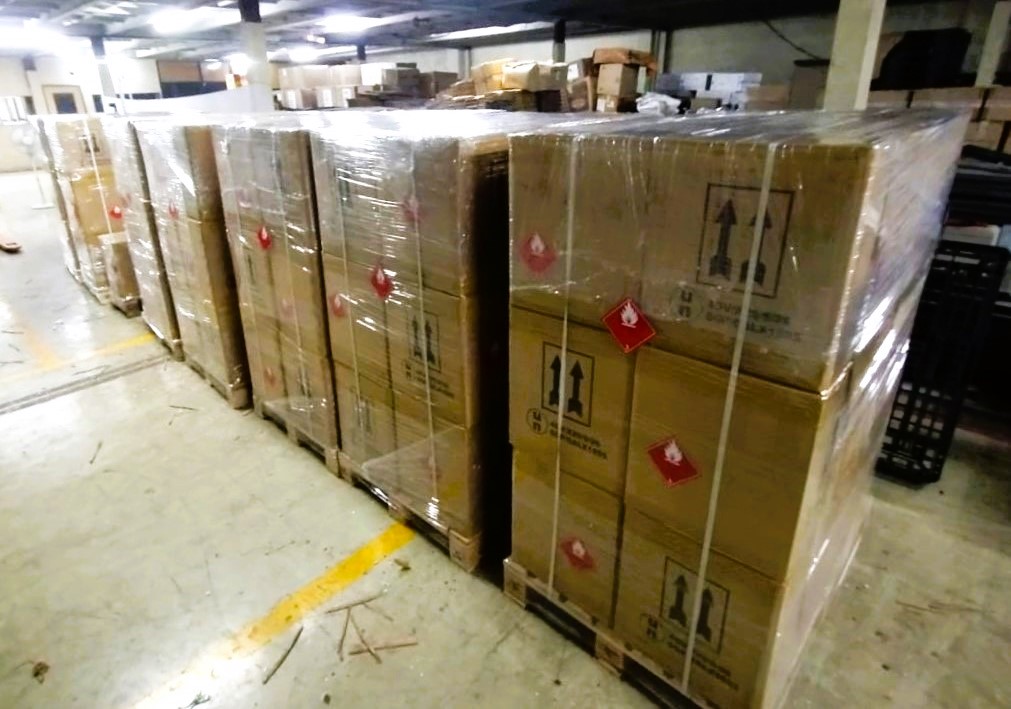
One widely used option for dangerous goods is the 4GV fibreboard box, which functions as a combination packaging. The 4GV classification allows different types of inner packaging to be placed within a single approved outer box, providing operational flexibility without compromising compliance. The “X” performance rating denotes suitability for higher-hazard materials, while the specified gross weight limit defines the maximum load the packaging can safely carry. When applied correctly, 4GV boxes offer strong stacking performance, resistance to impact, and protection against movement during transit.
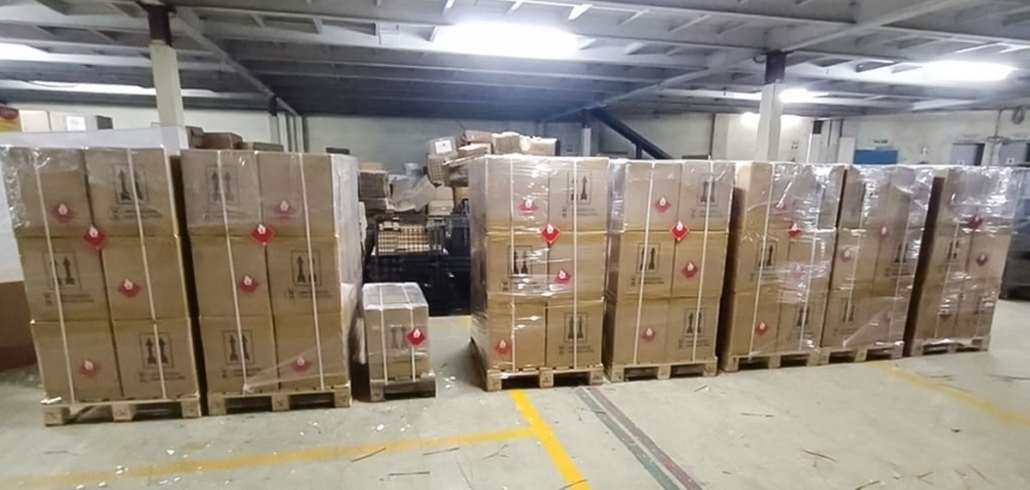
These principles were implemented during a recent international shipment of adhesives classified as UN 1133, falling under Class 3 (Flammable Liquids) and Packing Group II. The shipment involved a total volume of 2,560 litres, packed in 20-litre drums, which required compliant outer packaging suitable for export movement.
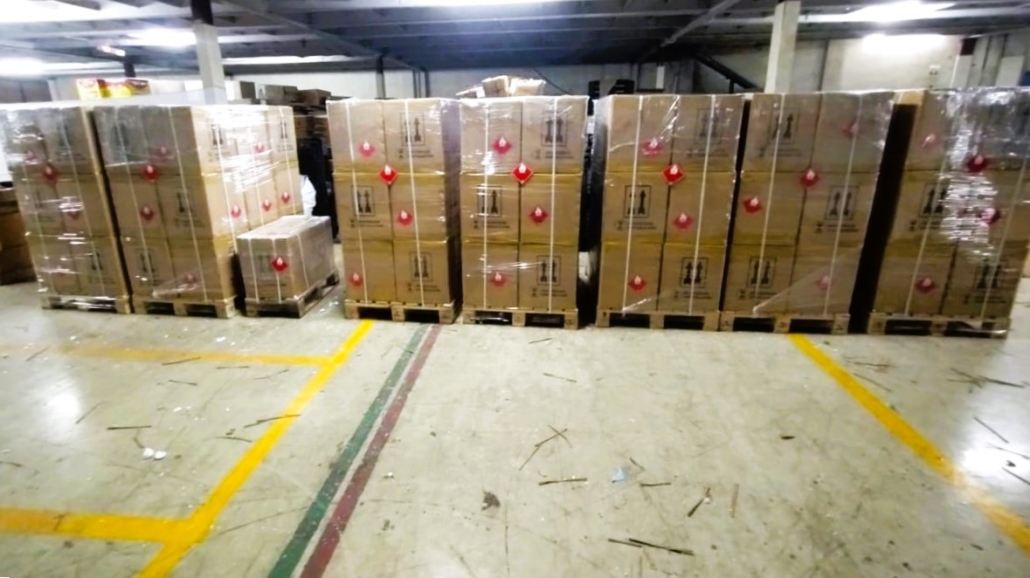
Each drum was repacked individually into a 4GV X25 UN-certified fibreboard box in accordance with applicable UN packaging instructions. In total, 128 drums were handled under controlled conditions to maintain package integrity and traceability. The packed boxes were then palletised to support safe mechanical handling and load stability, with 18 boxes arranged on each of 7 full pallets. The remaining boxes were consolidated onto another pallet to ensure balanced weight distribution bringing the total number of pallets to 8.
After palletisation, the cargo was secured using appropriate wrapping and strapping methods to limit movement during transport. The shipment was subsequently moved for export handling, loaded at Nhava Sheva Port, and delivered safely to its final destination in Australia.
This case demonstrates how the correct selection and application of UN-approved packaging plays a direct role in ensuring regulatory compliance, cargo safety, and reliable movement of dangerous goods across international supply chains.


Leave a Reply
Want to join the discussion?Feel free to contribute!